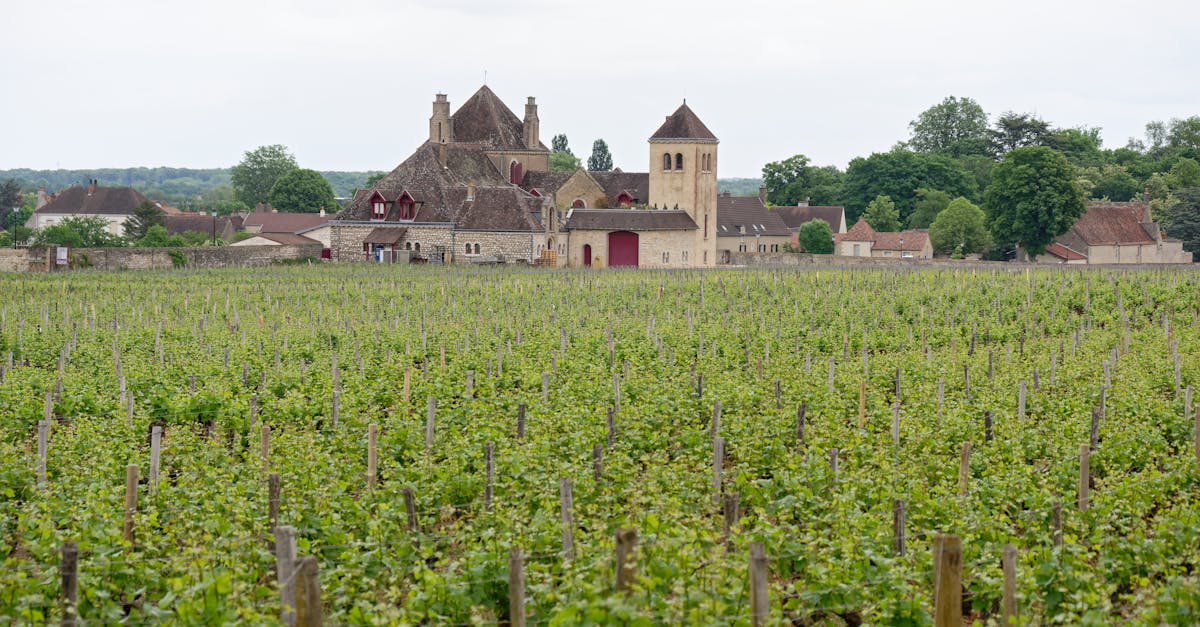
Wine lovers today have their eyes fixed on Burgundy, this iconic region that is constantly reinventing itself to stay at the top. In 2025, Burgundy wine promises to be rich in new developments, blending tradition and innovation in a delicate balance. Above all, what we should remember is a marked return to authenticity, with environmentally friendly practices gaining ground, encouraging estates like Domaine de la Romanée-Conti, Maison Louis Jadot, and Domaine Faiveley to refine their methods. But that’s not all: formats are diversifying, attention to consumer well-being is skyrocketing, and younger generations are introducing new ways to enjoy this nectar. We’ve put together this guide to uncover all these exciting trends, so you don’t miss anything that 2025 has in store for Burgundy wine. After all, it’s the region that makes connoisseurs’ hearts beat faster, while also lending itself to wonderful surprises. Between tasting innovations, forgotten grape varieties making a comeback, and wine tourism discoveries, the stage is set for a year rich in flavors and discoveries.
Alongside the must-haves like Domaine Leroy, Domaine Glantin, and Domaine de Montille, new, more responsible and bold approaches are emerging, driven by increasingly demanding and curious consumers. The goal is both to meet a growing demand for wines that respect the environment and to offer unique experiences, to be enjoyed without fuss but with great pleasure. To be on the mark, Burgundy wine lends itself perfectly to these new desires: subtle aromas, complex terroirs, and ancestral know-how. So, are you ready to feast your eyes?
A Return to Authenticity: How Burgundy Wine Is Adapting to Environmental Demands
The year 2025 confirms a major trend in Burgundy wine: a true return to more natural and sustainable methods. Winemakers are making every effort to ban pesticides and chemical treatments, favoring meticulous manual work in the vineyards.
At prestigious estates such as Domaine Leroy and Domaine de Montille, biodynamic and organic viticulture are becoming more widespread. These are no longer options, but essential to meet the growing demand for healthier, more environmentally friendly wines.
On the consumer side, the search for transparency and simplicity is essential. We want to know the story behind the bottle, the ecological impact, and the intrinsic quality of the wine, which reinforces trust in appellations and labels like AB or HVE. These certifications are becoming veritable passports for enjoying wine with peace of mind and awareness.
Why is this trend impacting the Burgundy wine landscape?
- 🌿 A rise in organic and biodynamic labels, demonstrating their seriousness and rigor.
- 🌍 A growing desire to reduce the carbon footprint linked to production, bottling, and transportation.
- 💚 Consumers are increasingly attentive to origin and responsible agricultural practices.
- 🤝 The commitment of renowned estates like Domaine de la Romanée-Conti or Domaine Faiveley to sustainable vineyards.
- 📚 The integration of traditional know-how brought up to date, combining respect for the terroir with gentle innovation.
These elements are not just a marketing approach. They are leading to a real transformation of the Burgundy wine landscape, which is also reflected in a better balance in the soil, enriched biodiversity, and the development of short supply chains that promote local producers.
| Committed Estates 🌱 | Key Practices 🛠️ | Main Certifications 📋 |
|---|---|---|
| Domaine Leroy | Biodynamics, manual labor without pesticides | Organic, HVE |
| Domaine Faiveley | Organic viticulture, reduced inputs | Organic, High Environmental Value |
| Maison Louis Jadot | Sustainable approach and respected tradition | Organic certification in progress |
| Domaine de la Romanée-Conti | Selective biodynamics, rigorous terroir control | Biodynamics |
This transition is not without challenges, but Burgundy is playing this nature card with great enthusiasm. To explore these aspects in more detail, a detour to nearby sustainable wine-growing regions and their feedback can be enlightening. https://www.youtube.com/watch?v=EEk4TdwsPdY Formats and innovations: from the classic bottle to new ways of enjoying Burgundy wine
Formats more suited to all occasions 🍷
🍾 Magnums are making a comeback, perfect for parties, family meals, and long tastings with friends.
🍷 Half-bottles appeal to wine lovers who want to moderate their consumption without sacrificing pleasure. 🥂 Canned and bag-in-box wines are becoming more popular for more on-the-go and relaxed drinking, especially among young urbanites.
- 🛍️ Ready-to-drink packs, blending wine with natural ingredients, are growing, driven by the quest for simplicity and freshness.
- 📱 Digital format: Interactive QR codes and apps allow you to instantly discover the bottle’s profile, its pairings, and even its ecological footprint.
- In this regard, this is great news for those who appreciate the great Burgundy vintages, particularly those from Maison Bouchard Père et Fils, Domaine Ponsot, or Domaine Comte Georges de Vogüé. These estates are not content with traditional production; they also know how to meet current expectations, with innovative packaging to appeal to a wider audience. Format 🥂
- Benefits ✔️
- Occasions of use 🎉
Magnum (1.5L) Sharing, better preservationParties, large meals Half-bottle (37.5cl) Moderation, variety Personal tastingCan (25cl)
| On the go, practical | Picnics, festivals | Bag-in-box (3L or more) |
|---|---|---|
| Economical, preservation | Everyday use, events | These innovations allow for recycling and waste reduction, a point fully aligned with the “sustainable” strategy already mentioned. They are increasingly captivating younger generations, who want an accessible, hassle-free wine that doesn’t sacrifice quality. https://www.youtube.com/watch?v=dVM-nOxjwfE |
| Discover the emerging trends in Burgundy wines for 2025. Explore the winemaking innovations, promising grape varieties, and shifts in consumption that are shaping the future of this iconic wine region. | Exploring Grape Varieties and Appellations: New Wines to Taste in Burgundy | In 2025, the Burgundy universe is not limited to classic grands crus. Winemakers and enthusiasts are increasingly interested in sometimes overlooked grape varieties and lesser-known appellations, because they bring a welcome freshness to the market and enriching flavor diversity. |
| 🍇 | Chenin Blanc | Revisited in Burgundy, although a staple of the Loire Valley, it is gaining fans thanks to its ability to reveal dry, sweet, or sparkling wines with exquisite aromas. |
| 🍷 | Nebbiolo | , so traditionally Italian, is also making inroads in certain Burgundian terroirs, surprising with its complexity and floral and spicy notes. |
🌿 The revival of

Trousseau
red, long confined to other regions.
- 🍾 A growing focus on crémants, particularly from Crémant d’Alsace , rivaling the great Champagne houses and seducing a wide audience with their refined effervescence.
- This diversification reflects a strong desire for authenticity and taste adventure. Among the big names to watch, you naturally have Domaine Glantin, Domaine des Hospices de Beaune, and Domaine Leroy, who are no longer afraid to venture off the beaten track. Grape Variety 🍇Main Characteristic 🌟
- Typical Uses & Notes 👃 Chenin Blanc Versatile, pronounced minerality Dry, mellow, sparkling, fruity and floral notes Nebbiolo
- Tannic, complex Aromas of roses, cherries, truffles, spicesPinot Blanc
Lively, elegant Fruity, lively, a good companion to shellfishTrousseau Supple, aromaticAromas of small berries, fresh, light To deepen your knowledge of other emblematic regions that are following this trend, a look at Languedoc and its potential can also provide valuable insight. New ways to pair food and wine: bold and harmonious, revisited
| You don’t taste a great Burgundy the same way you would drink anything else. The art of food and wine pairing is evolving to adapt to new cuisines and eating trends. Nothing is set in stone, but rather an invitation to explore and enjoy simple pleasures. | Some original pairings to try at home 🍽️🍷: | 🥦 A Jura Chardonnay with a mushroom risotto – full of roundness and minerality to enhance the vegetal flavors. |
|---|---|---|
| 🌶️ A fruity Gamay with a roasted vegetable tart – for a delicious and easy pairing. | 🍣 A Gewurztraminer from Alsace pairs perfectly with an Asian dish with notes of curry or ginger, balancing the sweet and spicy notes. | 🍔 A surprising Nebbiolo with a gourmet burger, playing on the tannins to enhance the umami of grilled meats. |
| 🌮 A dry, lively Chenin Blanc for fish tacos – a punch of refreshing acidity that cleanses the palate well. | These pairings also demonstrate a desire to break down prejudices about traditional pairings by incorporating a wider range of flavors and textures. Estates like Domaine Ponsot and Maison Louis Jadot are investing in this approach, sometimes through specific vintages designed for these indulgent moments. | Dish 🍽️ |
| Recommended Wine 🍷 | Why it works? 💡 | Mushroom Risotto |
| Jura Chardonnay | Minerality and roundness that complement the earthy flavor | Roasted Vegetable Tart |
Fruity Gamay Smoothness and freshness that complement the vegetables Spicy Asian Dish
Alsace Gewurztraminer
Balance between sweetness and spice
Gourmet Burger
- Nebbiolo
- Tannins and power enhance the richness
- Fish Tacos
- Dry Chenin Blanc
- Refreshing acidity
Want to experiment with wines from all over France and their pairings? Also explore the inspirations of the Rhône Valley or explore the subtleties of rosé wines in Savoie through this guide. Economic trends and internationalization: what future for Burgundy wine? Beyond its rich flavors and tradition, Burgundy wine is part of a rapidly changing economic and international dynamic. In 2025, markets are evolving, digitalization is redefining the way we buy and sell, and the reputation of the vineyard is increasingly transcending borders. The major economic trends currently 🤑 📈 The premiumization of wines: consumers are placing more emphasis on quality, willing to spend for a real experience. 🌐 The development of online sales is facilitating access to rare vintages, particularly for estates such as
| Domaine des Hospices de Beaune | or | Maison Bouchard Père et Fils |
|---|---|---|
| . | 🍷 Opening up to international markets, particularly with the growth of the Brazilian market where French wine is gaining ground (more information here). | 📦 Adapting logistics to meet the demand for fast and seamless delivery, key factors in e-commerce. 💡 Storytelling campaigns around wineries, highlighting family histories and the commitment of winemakers, create an emotional connection. |
| Burgundy isn’t alone in facing these challenges. We’re also seeing strong interest in the southwest and Alsace appellations, as evidenced by the gradual rise in prices and the attention paid to the factors influencing wine value ( | find out more here | ), while regions like Languedoc and Provence are developing strategies that are both qualitative and commercial ( |
| figures and trends | ). Economic Factor 💰 | Impact on Burgundy 📊 |
| Areas Affected 🔑 | Premiumization | Promotion of Prestigious Wines |
| Domaine de la Romanée-Conti, Domaine Leroy | Digitalization of Sales | Easier Access to Rare Wines |
Maison Louis Jadot, Domaine Faiveley International Markets Expansion in Brazil, USA, Asia Domaine des Hospices de Beaune, Domaine PonsotStorytelling & Marketing
Strengthened Customer Engagement
Maison Bouchard Père et Fils, Domaine Comte Georges de Vogüé
For those who want to stay abreast of all market developments, a look at the latest trends in Bordeaux wine can be an interesting source of inspiration. Regardless, Burgundy remains a strong pillar, able to elegantly combine modernity and heritage.
- https://twitter.com/Prefet21_BFC/status/1859154358375436622
- FAQ: Frequently Asked Questions about New Burgundy Wines in 2025 Which Burgundy estates are most committed to sustainable viticulture? Domaine Leroy,Domaine Faiveley, and
- Domaine de la Romanée-Conti are among the leaders, offering certified organic and biodynamic wines.Are the wines in alternative formats of good quality? Yes, the wines offered in half-bottles or bag-in-boxes are often made from the same vintages as the classic bottles, allowing for quality and freshness.Which new or revered grape varieties should you discover in the Burgundy vineyards?
- Chenin Blanc, Nebbiolo, Pinot Blanc, and Trousseau are grape varieties to keep an eye on for variety.
- How should Burgundy wine be paired with modern cuisine?
Opt for bold pairings with vegetarian, spicy Asian, or fusion dishes, such as a Gamay with roasted vegetables or a Nebbiolo with a gourmet burger.Is the international market hampering the quality of Burgundy wine?On the contrary, export imposes a high level of demand and pushes wineries to renew themselves while maintaining their authenticity.