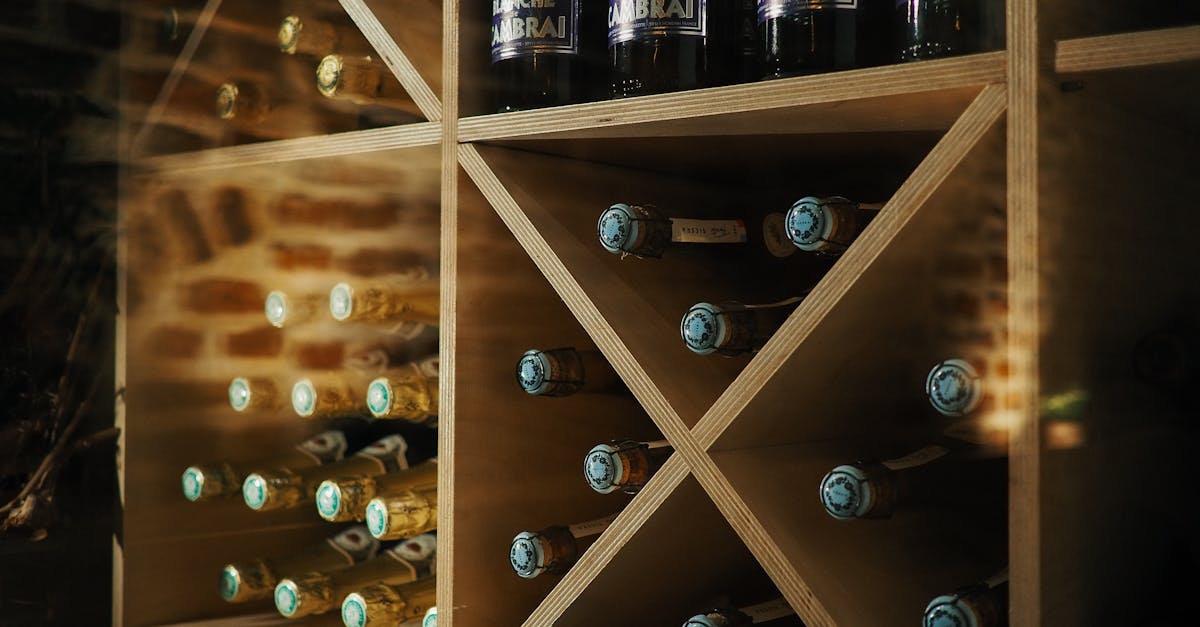
It’s not uncommon to get excited about a beautiful bottle of Bordeaux wine, especially when it’s a Château Lafite Rothschild or a Château Margaux. But for the magic to truly happen when tasting, storing the wine in the right conditions is crucial. You’re probably wondering how to prevent this precious bottle from turning sour or losing its unique aromas? No need to become an oenology expert; we’ve put together this solid guide to protecting your liquid treasures. From the ideal temperature and choosing the right location to the little details that make all the difference, you’ll discover how to pamper each bottle as it deserves. Whether you have a collection of Château Latour, Château Haut-Brion, or Château Canon, it’s time to delve into the secrets of proper storage.
While a traditional cellar remains the benchmark, it’s not always within reach, especially in an apartment. Fortunately, there are also simple and effective alternatives, such as an electric wine cellar or even an optimized cabinet. But be careful, there’s no point in piling them up haphazardly: light, vibrations, and temperature variations are all pitfalls to avoid to preserve the wine’s qualities. By mastering these tips, you can guarantee your bottles a harmonious development over several years. So, ready, ready? Let’s dive into this fascinating world to reveal the full potential of your Bordeaux wines! The ideal conditions for properly storing your Bordeaux wine: temperature, humidity, and light
To aim correctly and dazzle with every tasting, you must first seriously consider storage quality. Wine is a living being that must be pampered. Three elements play a central role: temperature, humidity, and lighting.
Temperature, the conductor of aging
Temperature is no joke: it must remain stable and ideally range between 10°C and 14°C. This golden range allows Bordeaux wine, whether Château Pichon Longueville or Château Mouton Rothschild, to age gently and develop complex flavors. Above 18°C, the wine takes off at a sprint, evolving far too quickly. As a result, it loses its aromas and oxidizes prematurely. Below 8°C, it’s time to run out of energy, and aging stops or becomes chaotic. Not to mention that sudden temperature fluctuations are wine’s worst enemies. Imagine a wine trembling with the heat and cold, crumbling under stress and eventually losing quality.
Humidity, the cork’s invisible ally Humidity is less visible but just as crucial. It must be maintained between 60% and 80% to ensure the health of corks. Too dry, and the cork dries out, allowing air to infiltrate and wreak havoc in the bottle. Too humid, and mold can develop on the cork or labels, making the bottle unappealing. To give a concrete example, Château Haut-Brion, which experiences excessively dry conditions, will not be able to age harmoniously as it should. In short, a happy medium must be found, and it’s worth having a hygrometer, accessible and handy in a cellar or even a fitted cupboard.
Protect your Bordeaux wines from light and vibration
Light is the bogeyman of wines, especially when the glasses are clear, like some whites. It gradually deteriorates the colors and, above all, the delicate aromas. Rule number one: choose a dark location, away from windows or strong lighting, or make sure your cabinet is equipped with a UV filter, as found in some modern electric wine cellars. Finally, we’ll tell you straight away: vibrations should be avoided. Their impact is often underestimated, but a small motor running nearby or a poorly insulated fridge can be enough to disturb the wine. These jolts disrupt natural sedimentation and, in the long run, degrade the wine’s structure. For lovers of exceptional wines like Château Palmer or Château Figeac, avoid sources of vibration at all costs. 🌡️ Ideal temperature: 10-14°C, without sudden fluctuations 💧 Humidity: between 60% and 80%
🕶️ Store away from direct light and UV rays
✨ Avoid vibrations to avoid disturbing the wine
Key Factor 🎯
- Optimal conditions ✔️
- Impact in case of error ⚠️
- Temperature
- 10-14°C, stable
| Aging too quickly or frozen | Humidity | 60-80% |
|---|---|---|
| Dried cork or mold | Light | Darkness or UV filter |
| Alteration of aromas and color | Vibration | Avoid sources of agitation |
| Wine disturbance and oxidation | Discover our wine storage solutions to preserve your bottles in ideal conditions. Whether you’re a wine connoisseur or a collector, we have what you need to ensure the quality and longevity of your wines. | Where to store your Bordeaux wines at home: alternatives to a traditional cellar |
| We all have in mind that cool, dark cellar, ideal for treasures from Château Saint-Pierre or Château Canon, but it’s difficult to find one in the city center. Fortunately, you don’t need a real underground cellar to properly store your Bordeaux wines. Let’s take a look at the best options suited to your space and budget. | The traditional cellar: natural luxury | Nothing beats a natural cellar, buried or semi-buried. It guarantees a near-perfect environment: stable temperature, relative humidity, and total darkness. It’s in these types of places that the finest vintages from Château Lafite Rothschild or Château Margaux find their serenity. The only drawback is that not everyone is so lucky. You also need to ensure that the soil isn’t too damp to avoid harmful over-humidity. |

This is the ideal solution for wine enthusiasts who want precise control. These devices replicate the conditions of a natural cellar with temperature and humidity settings down to the nearest degree. Whether you’re storing a Château Pichon Longueville or a Château Mouton Rothschild, an electric wine cellar allows you to easily adjust all of this, and even store different types of wine in the same unit thanks to its separate compartments.
However, it’s important to choose a quality model equipped with an anti-vibration system. This prevents micro-shocks that can go unnoticed but are a real threat to wine.
A well-designed cabinet: the accessible trump card
For those with limited space or without a cellar or the budget for a wine cooler, a well-placed cabinet can do the trick perfectly:
🚪 Choose a location away from heat sources (radiators, kitchen)
🌡️ Ensure a stable temperature and avoid significant fluctuations
💧 Install a small hygrometer to monitor humidity
📐 Store bottles horizontally, ideally on sloping shelves
It’s not ideal, but with a little care, it works quite well!
- The basement or cellar: a good compromise
- These spaces can provide a cool, sheltered environment, although less controlled than a cellar or an electric wine cooler. To limit the effects of temperature fluctuations, choose wooden crates instead of metal shelves.
- Want to learn more about other regions? Discover how to store wines in the Southwest of France or the specific characteristics of Burgundy’s great vintages to broaden your horizons! 🏠 Natural cellar: natural temperature and humidity
- ⚡ Electric cellar: precise control and multiple options
📦 Optimized cabinet: accessible and practical
🪵 Basement/cellar: cold but variable, use of wooden crates
Type of storage 🏷️
Ideal temperature 🌡️ Recommended humidity 💧 Advantages 🌟 Disadvantages ⚠️ Natural cellar
- 10-14°C
- 60-80%
- Stable and economical environment
- Little accessible in urban areas
| Electric cellar | Adjustable flexibility | Generally controlled | Precise, modular control | Cost and energy consumption |
|---|---|---|---|---|
| Fitted cabinet | Variable depending on location | Depends on ventilation | Easy to install, inexpensive | Less stable, requires supervision |
| Basement/cellar | Cool but not always stable | Variable | Accessible, natural cool | Poorly insulated, vibrations Possible |
| https://www.youtube.com/watch?v=u1aYEG9UOjg | Organize and organize your cellar or storage space to preserve Bordeaux wine | After choosing the location, the best way to preserve your treasures remains proper storage. Proper organization guarantees a wonderful experience and a tasting rich in aromas. | Positioning the bottles: horizontal or inclined? | It can’t be stressed enough: contact between the cork and the wine is essential. Storing your bottles horizontally prevents the cork from drying out and wearing down its protective magic. Sloping shelves are also more practical to prevent bottles from rolling, and also make it easier to consult your treasures. This works for a Château Figeac as well as a younger Saint-Émilion. |
| Sort by type and aging duration | Organizing your cellar also means thinking about timing. There’s no point opening a Château Latour that needs 10 years of aging before reaching its peak! A simple classification by type (red, white, rosé) and shelf life helps you plan: | 🍇 Powerful red wines (e.g., Château Mouton Rothschild, Château Lafite Rothschild): long aging potential of 10 to 30 years | 🍷 Dry white wines (e.g., Château Haut-Brion blanc): faster drinking, 2 to 7 years | 🥂 Champagnes and sparkling wines: short aging potential, ideally consumed within 3 to 5 years |
Ideal Aging Time ⏳
Recommended Temperature 🌡️
Powerful Red Wines
10-30 Years
12-14°C
Dry White Wines
- 2-7 Years
- 8-12°C
- Champagnes and Sparkling Wines
3-5 Years
| 6-10°C | Discover the best wine storage solutions. Protect and store your bottles in ideal conditions to preserve their flavor and quality with expert advice and suitable storage options. | https://www.youtube.com/watch?v=8WkpspOqngs |
|---|---|---|
| Adapting Storage According to the Type of Bordeaux Wine: Reds, Whites, Champagnes, and Wines for Aging | While you can adjust the general conditions a little, each type of Bordeaux wine has its own personality and requires tailored care. | Bordeaux Red Wines: Robust but Demanding |
| Some vintages, such as Château Lafite Rothschild or Château Pichon Longueville, are among the best with exceptional aging potential, often lasting 10 to 30 years. These wines should be stored between 12 and 14°C (54 and 57°F), in a stable environment. The grape variety, tannins, and dark color lend themselves well to aging, but let’s not forget that vibrations or inadvertent light can ruin decades of work. | Bordeaux white wines: more fragile, more delicate | Dry whites, such as those from Château Haut-Brion Blanc, require a little more gentle treatment. Their ideal serving temperature is around 8 to 12°C (46 to 54°F), to preserve their freshness and liveliness. Some sweet white wines can even improve with 5 to 20 years of aging, like the great bottles of Sauternes. To learn more, take a look at this guide to prestigious Sauternes wines. Champagnes and sparkling wines: freshness above all |
| If you’re lucky enough to taste a choice champagne, be careful how it’s stored. The ideal temperature is lower, around 6 to 10°C. Even the slightest sudden change risks compromising the finesse of the bubbles and the wine’s character. A good blanc de blancs champagne deserves the utmost attention; discover why on this dedicated website. | Choose blanc de blancs champagne. 🍷 Red wines: 12-14°C, long-term storage possible | ❄️ White wines: 8-12°C, enjoy more quickly |
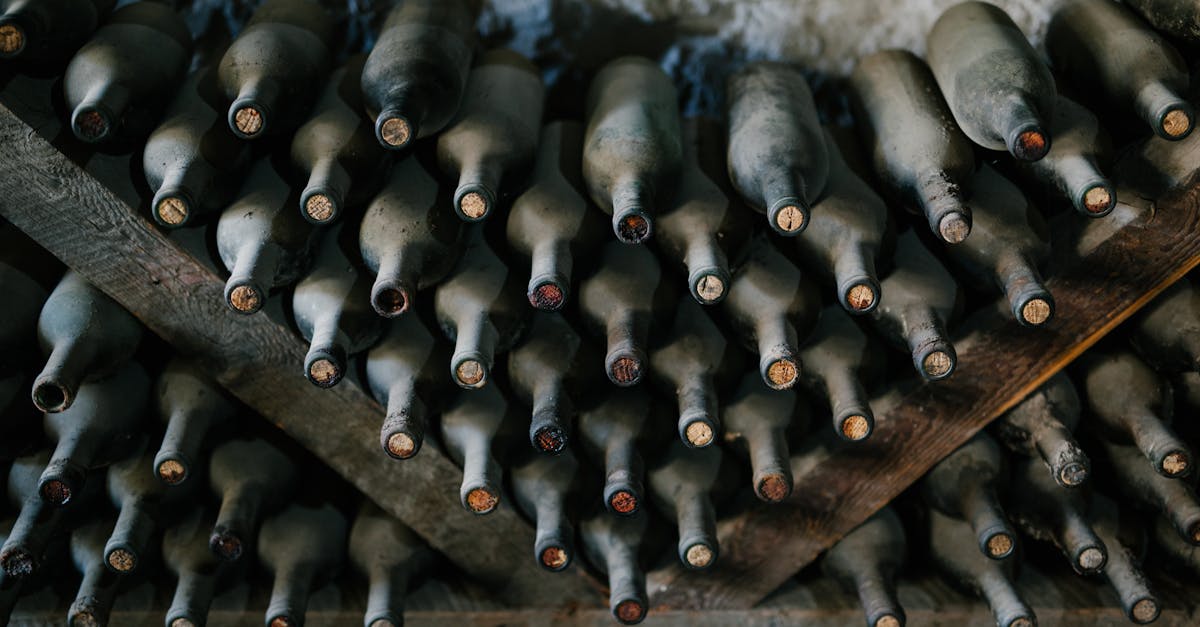
Ideal temperature 🌡️
Typical storage life ⏳
Example of famous Château 🏰
Red wines
12-14°C
10-30 years Château Latour, Château Mouton RothschildWhite wines
8-12°C
2-20 years Château Haut-Brion whiteChampagnes and sparkling wines
- 6-10°C
- 3-10 years
- Château Palmer (sparkling)
| Tips and mistakes to avoid for the perfect storage of your Bordeaux wine | Finally, to ensure everyone’s safety and longevity, a few top tips are in order. Avoid common mistakes that can ruin everything in no time. | 🚫 Never expose bottles to strong odors (paint, solvents, chemicals). Cork is porous and absorbs everything. | 🚫 Don’t handle bottles unnecessarily. The less you move them, the better for their stability. |
|---|---|---|---|
| 🪵 Choose wooden racks, which are more stable and offer better insulation than metal. | 📊 Regularly monitor temperature and humidity with a thermometer and hygrometer so you can take action at the slightest deviation. | 📅 Keep a notebook or an app to keep track of what to drink and when, thus avoiding forgotten bottles. These simple steps ensure that the Bordeaux wine of your dreams (Château Saint-Pierre, Château Canon?) is always at its peak. | Common Mistake ❌ |
| Consequences for the Wine ⚠️ | Suggested Remedy ✅ | Exposure to strong odors | Spoiled cork and wine |
| Storage away from pollutants | Excessive handling | Sediment alteration | Limit movement |
Use of metal racks
Transmission of vibrations and variations
- Opt for wooden racks
- Lack of controlled conditions
- Chaotic aging
- Regular monitoring with tools
- FAQ – Frequently Asked Questions about Storing Bordeaux Wine
How do I know if my Bordeaux wine is ready to be opened?
| Knowing the vintage and the château’s specific recommendations, you can estimate the ideal maturity. Some Bordeaux wines, such as those from Château Lafite Rothschild, deserve long-term aging, while others can be enjoyed more quickly. | Can you store Bordeaux wine in a conventional refrigerator? | It’s possible for a short period, but it’s not recommended for the long term because the refrigerator doesn’t provide a stable temperature or adequate humidity. |
|---|---|---|
| Is it better to invest in an electric wine cellar? | Yes, especially if you have several precious bottles. A well-chosen electric wine cellar allows for strict temperature and humidity control and protects against vibrations. | Do temperature fluctuations really affect wine quality? |
| Absolutely. Frequent or significant variations can cause uneven aging and a loss of aromas. | How to preserve corks? | By maintaining a suitable humidity level (60-80%) and storing the bottles horizontally to keep the cork moist. |