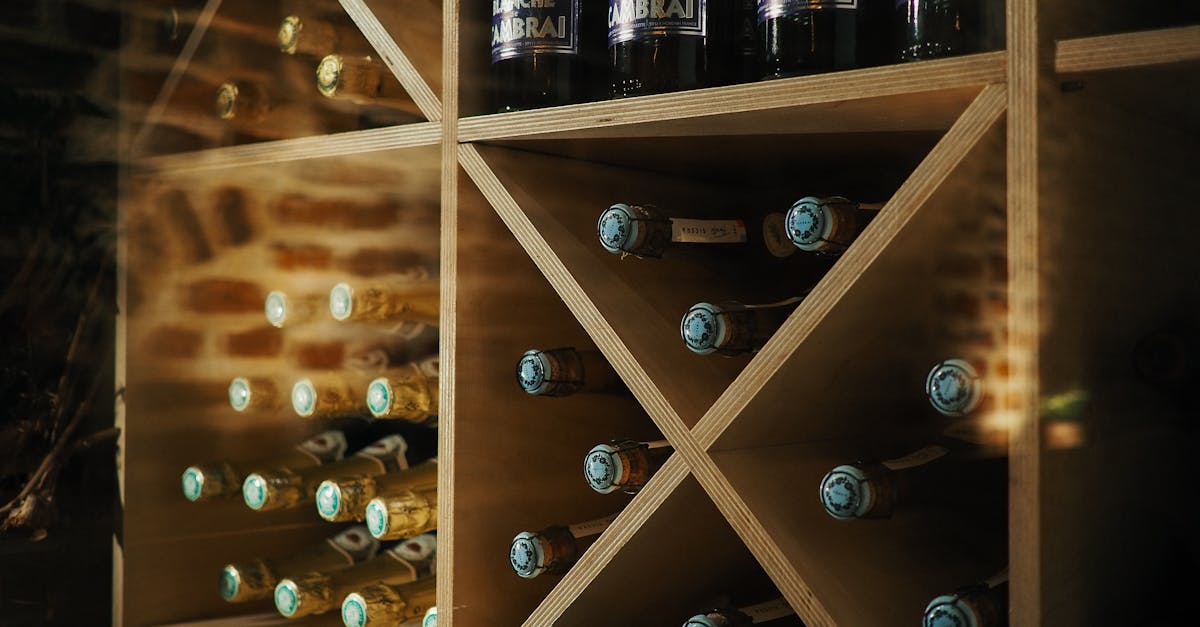
In the Loire Valley, a rich and varied terroir, the wines are not lacking in charm. Whether it’s a lively white from Sancerre, an elegant red from Chinon, or a sweet wine from Domaine Huet, preserving them requires certain expertise. But don’t panic, even if you’re not lucky enough to have a vaulted cellar at the Château de Chambord, we’ve put together this simple and effective guide to storing your bottles without any hassle. Between the Caves de la Loire, estates like Domaine Pascal Jollivet, or legendary places like Château de Brézé, wine enthusiasts have their own tips. So, how do you keep these gems at the right temperature, avoid unpleasant surprises, and dazzle your loved ones? Let’s discover the keys to perfect storage, so you never miss a chance to enjoy a great vintage. Creating the Ideal Environment for Storing a Loire Valley Wine
Before delving into the art of preservation, you need to lay the groundwork. The quality of your wine depends primarily on where it spends its time between tastings. And we’re not necessarily talking about a noble underground wine cellar like those found at the Château de Saumur or the famous Caveau des Vins de Loire. The secret lies in a few simple keys that allow you to control temperature, humidity, and light.
Temperature at the Heart of Storage You don’t need to be a sommelier to understand that wine likes stability. For Loire Valley white wines, store them around 10 to 12°C, while reds can tolerate a temperature between 14 and 16°C. For example, wines from the Domaine des Baumard require special attention in this regard to maintain their freshness and aromas. Too hot, rapid pasteurization; too cold, solidified taste. Here’s a tip: investing in an electric wine cellar or a small apartment wine cabinet allows you to precisely program these temperatures. This way, you can mimic, in a mini version, the stability offered by a clay cellar at Château de Brézé. 🌡️ Ideal temperature for white wines: 10-12°C🌡️ Ideal temperature for red wines: 14-16°C
⚠️ Avoid sudden fluctuations that can harm the wine
🔍 Check with a thermometer placed in the cellar Humidity: the often-overlooked asset Humidity often takes a back seat, yet it is crucial. In an ideal cellar, it should be between 70% and 80%. If the air is too dry, the corks dry out, letting air through, and your wine quickly oxidizes. Conversely, excessive humidity promotes the growth of unsightly mold, which can also affect quality.
To monitor this parameter, equip yourself with a hygrometer, which measures humidity. This small investment is worth it, especially if you want to preserve rare vintages from Domaine Huet or treasures from Domaine Pascal Jollivet. A simple container of water in a cellar that’s too dry can also rebalance the atmosphere. 💧 Recommended humidity level: 70-80%🚫 Too dry: dried corks, accelerated oxidation
- 🚫 Too humid: risk of mold on the cork and label
- 📏 Monitor with a hygrometer placed high up
- Light, the bottle’s sworn enemy
- Bottles don’t like too much sunlight or too intense white light. UV rays cause premature aging of wine, especially delicate whites like a Sauvignon from the Cave des Vignerons de Montlouis. The trick? Store your bottles away from natural light, in a dark place or under subdued lighting.
Traditional cellars at Caves de la Loire often favor dim lighting, perfect for slowing the development of aromas. Also, consider avoiding overly bright fluorescent or neon tubes. Warm-spectrum LEDs remain ideal for viewing without damaging the bottles. 🌑 Storage in a dark place
💡 Prefer dim lighting or warm LEDs
☀️ Avoid UV rays and direct light 🔦 Limited lighting in the cellar Key factor 🔑 Ideal value 🌟Consequences in case of failure ⚠️
- Temperature
- 10 to 16°C depending on the type of wine
- Oxidation, accelerated aging, loss of aromas
- Humidity
70-80%
Dry corks or mold LightLow intensity, no UV rays
Rapid deterioration of the wine, loss of finesse
- Discover our wine storage solutions, suitable for all wine lovers. Optimize the storage of your bottles with modern and elegant wine cellars that preserve the quality and flavors of your favorite wines. The best solutions for storing and preserving your Loire Valley wine
- If you don’t have access to an underground wine cellar like those at Château de Brézé or Château de Chambord, don’t panic. Several alternatives exist to replicate optimal conditions. This is especially useful if you live in an apartment or only have one storage room.
- Underground wine cellar: a must for aging your bottles
- Preserving wine for several decades requires patience and precise conditions. Underground cellars, often maintained at 12°C with ideal humidity, remain the most effective solution. Their clay floors also act as a buffer for temperature and humidity, stabilizing the environment.
| Enthusiasts who visit the Caves de la Loire or frequent estates such as Domaine des Baumard | They know: a natural cellar is the key to richly aromatic aged wines. However, this option isn’t accessible to everyone. | Electric Wine Cellar: A Practical and Efficient Solution |
|---|---|---|
| For city dwellers or those with limited space, the electric wine cellar is a great option. It allows you to adjust the temperature and humidity as desired, thanks to sophisticated integrated systems. You can age your favorite bottle from the | Caveau des Vins de Loire | while enjoying a compact, designer piece of furniture. |
| 💡 Precise temperature control (10 to 16°C) | 💧 Controlled humidity to protect your corks | 📦 Compact and fits into a corner of your apartment |
| 🔕 Quiet and low vibration to avoid disturbing the wine | Shelves and racks: a simple alternative for short-term storage | No need to invest in a sophisticated cellar if you plan to drink your bottles soon. There are many wooden racks or modular shelves available. These solutions work very well for keeping your Domaine Huet wines or the little pleasures of Domaine Pascal Jollivet within easy reach. This solution also has the advantage of being mobile and aesthetically pleasing. |
Advantages ⭐
Disadvantages ⚠️
Underground Cellar
Optimal temperature and humidity control, long shelf life
Costly installed, dedicated space required Electric Cellar Compact, efficient, precise settings
Energy consumption, variable price
Shelves / Racks Easy to install, economical, aesthetically pleasingNo climate control, limited shelf life
- https://www.youtube.com/watch?v=mIW04XL-sdg
- Adopt best practices to keep a Loire Valley wine at its best
- Technique isn’t everything. To properly store a wine, a set of simple and effective reflexes is essential. Knowing your bottles, their format and the right actions can avoid many disappointments, especially with vintages from
- Domaine des Baumard
or
Saumur Castle . Store bottles lying down A basic that is often ignored: keeping the bottles lying down allows the wine to remain in contact with the cork. This therefore does not dry out and remains waterproof, protecting your nectar from unwanted oxygen. A good practice for white wines from Domaine Huet
| or the light reds of Chinon. | Recondition wisely | We admit, just talking about it seems a bit technical! However, reconditioning a bottle by changing the cap helps extend its life. This operation should be reserved when you wish to keep a wine for a very long time, a common practice in certain areas such as |
|---|---|---|
| Domaine Pascal Jollivet | . But be careful, it requires attention to detail and equipment. | 🔄 Open, refill, reseal |
| ⚠️ Delicate operation, often carried out by professionals | 🛡️ Protects wine from premature aging | The importance of the bottle format |
| The fat of the preservation also depends on the container. Roughly speaking, the larger the bottle, the better the wine evolves over time. The magnum format (1.5 L) is often popular with enthusiasts who want to keep a wine for more than 10 years, also being suitable for a | Bordeaux | than for a Loire wine. |
Bottle format 🏺
Key benefit ⭐ Recommended retention period ⏳ Magnum (1.5L) Slow and harmonious aging10 years or more
Standard bottle (75 cl)
Classic, versatile storage 3-10 years depending on wine Half bottle (37.5 cl)
Fast consumption, fresh
1-3 years discover our wine storage solutions, specially designed to preserve the quality and flavor of your bottles. benefit from expert advice and tips to optimize your wine cellar.https://www.youtube.com/watch?v=60fIF427V20
- Specific Storage Differences Among Loire Valley Wines
- What makes Loire Valley wines so rich is their variety. Whether it’s dry white, subtle red, or naturally sweet wine, storage methods vary everywhere. Domaine Huet, for example, is renowned for its natural wines that require special care, while Cave des Vignerons de Montlouis offers light whites that can be drunk fairly quickly.
- Storing a Loire Valley White Wine
Loire Valley white wines, such as those from Domaine Pascal Jollivet, require a cool environment, between 8 and 10°C. Their freshness is their greatest asset, so the fruit must be preserved by avoiding heat and light. Sweet white wines, such as those from Domaine des Baumard, require cooler storage (6-7°C). Managing this range allows you to calmly await their peak flavor. Better Storage of Loire Valley Red Wines
Red wines, particularly those from Château de Saumur or Domaine Pascal Jollivet, are best aged around 14-16°C. This slightly higher temperature promotes the development of tannins without burning the fruit. For those who wish to age further, placing their bottle in a cellar between 15 and 18°C, as in the Southwest, can accelerate aging for faster opening without compromising its complexity. ❄️ Chilled whites between 6-10°C depending on the style 🔥 Slightly warmer reds, 14-16°C
⏳ Storage method chosen according to desired aging duration
| Type of wine 🍇 | Ideal temperature 🌡️ | Storage life 🔒 |
|---|---|---|
| Dry white wine (e.g., Domaine Pascal Jollivet) | 8-10°C | 3-5 years |
| Sweet white wine (e.g., Domaine des Baumard) | 6-7°C | 5-10 years |
| Red wine (e.g., Château de Saumur) | 14-16°C | 5-15 years |

A stable temperature, between 10 and 16°C depending on the type of wine, is essential to preserve the finesse of the wines.
Should I store my bottles upright or lying down? It is strongly recommended to store bottles lying down to keep the cork moist and avoid exposing the wine to oxygen. Can I use an electric cellar for my Loire Valley wines?
Yes, it’s an excellent alternative for reproducing ideal conditions without having a natural cellar.
How should I store white and red wines? Loire Valley white wines prefer cool temperatures between 6 and 10°C, while red wines are best stored around 14 to 16°C.What should I do if the cellar is too dry? Increase humidity with a humidifier or container of water to prevent the corks from drying out and affecting preservation.