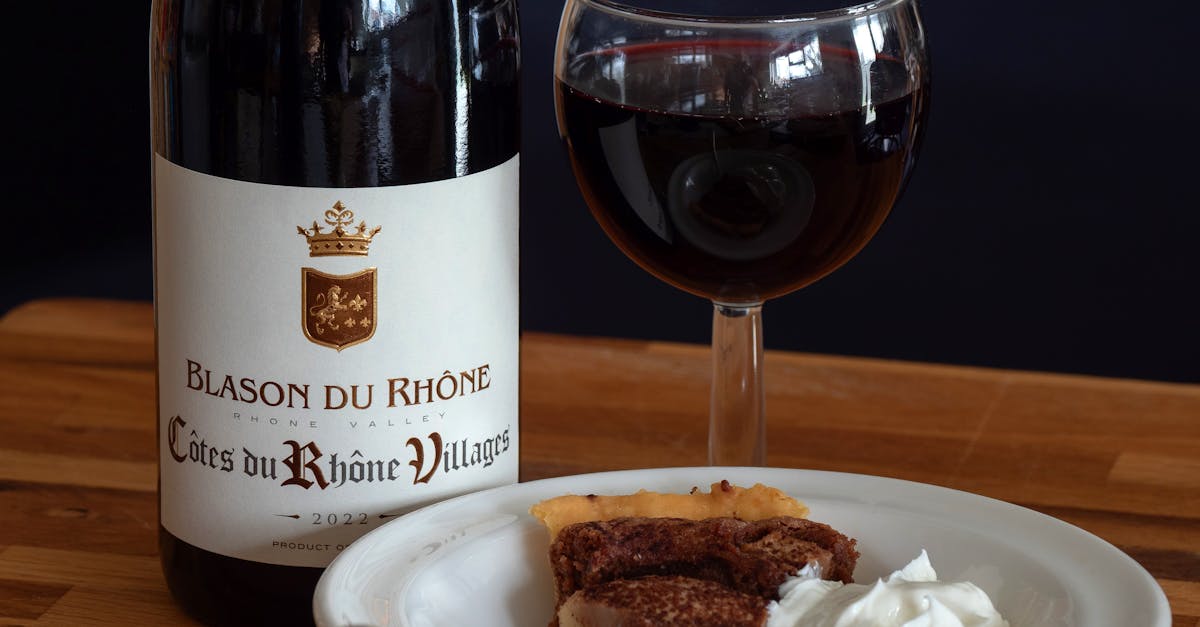
The Rhône Valley, this wine-growing gem that winds along the legendary river, reveals a palette of wines as vast as its picturesque landscapes. This exceptional terroir, the fruit of a thousand-year history and deep-rooted expertise, produces vintages that inspire dreams well beyond France’s borders. Between the steep slopes of the north, where Syrah reigns supreme, and the sunny plains of the south, cradled by the Mistral wind, Rhône Valley wine seduces with its diversity and richness. From full-bodied reds to aromatic whites, not to mention flavorful rosés and naturally sweet wines, each bottle tells a unique story. It’s a world where tradition rhymes with innovation, where each estate, from Château de Beaucastel to Domaine Jean-Louis Chave, creates unforgettable taste experiences. If you think you’ve tasted everything when it comes to French wine, wait until you dig a little deeper into this astonishing region that stretches from Vienne to Avignon, passing through terroirs like Vivarais and Luberon. Let yourself be surprised by the finesse of the northern crus, where granite soils combine with Syrah to create exceptional wines for aging. Or explore the south, where Grenache flourishes in the heart of sun-drenched terroirs steeped in history, producing generous wines full of character, far beyond the legendary Châteauneuf-du-Pape appellation. In 2025, the Rhône Valley remains an essential reference for enlightened wine lovers and curious neophytes.
We’ve put together this guide to unravel all the facets of this fascinating vineyard, to understand its grape varieties, its wines, its appellations, and also what makes it so unique on the world stage. Let’s get started on unearthing the essentials and getting everyone to agree on what Rhône Valley wine represents today, this pearl in the heart of wine-growing France.
What are the styles and characteristics of Rhône Valley wines?
The Rhône Valley doesn’t take things too easy: it offers a range of wines with multiple styles, which can be overwhelming for the novice, but delight the discerning wine connoisseur. To accurately capture and understand the essence of these wines, it’s important to distinguish between two major regions with very different climates and terroirs: the Northern Rhône Valley in the north and the Southern Rhône Valley in the south.
The North: Elegant, Structured, and Spicy Wines
The northern region is characterized by a continental climate, where winters are cold and summers are hot, but less intense than in the south. Here, Syrah reigns supreme for reds, producing deep, powerful wines with spicy notes that make all the difference. Grands crus such as Hermitage, Côte-Rôtie, and Saint-Joseph evoke elegant wines for aging, which gain complexity over time. The northern whites are just as seductive. Made primarily from grape varieties such as Viognier, Marsanne, and Roussanne, they shine with their complex aromatic profile, with floral and fruity notes, and a perfect balance between richness and freshness. Condrieu, for example, highlights the finesse of Viognier, while Hermitage blanc seduces with its richness and length. These distinctive wines are sure to make a statement at the table.
The South: Solar, Generous, and Round Wines
South of Montélimar, the Rhône Valley widens, and the climate becomes Mediterranean with a helping hand from the Mistral, the dry wind that protects the grapes from disease. Here, Grenache dominates, aided by other grape varieties such as Syrah, Mourvèdre, and Cinsault, producing warm, often full-bodied reds that are surprisingly balanced despite their power.
Southern white wines, often blends of Grenache Blanc, Clairette, or Roussanne, are generous and supple. The warmth of the terroir is evident in these expressive vintages, with notes of ripe fruit, flowers, and sometimes even a hint of sweet spice. And what about the rosés, particularly from the Tavel appellation, the first AOC dedicated to this style in France, which has successfully created fresh, flavorful, and structured wines, perfect for summer. 🟠 Dry red wines: 80% of production, combining Nordic freshness and southern power
⚪ White wines: often blends, with fresh and aromatic profiles in the north, richer in the south
🌹 Rosés: typical of Tavel, round and well-balanced
- 🍭 Naturally sweet wines: rare but typical (Rasteau, Muscat Beaumes-de-Venise)
- Zone
- Wine styles
- Main grape varieties
| Key characteristics | Northern Rhône Valley | Dry reds and whites, wines for ageing | Syrah (red), Viognier, Marsanne, Roussanne (white) |
|---|---|---|---|
| Elegance, structure, spices, aromatic finesse | Southern Rhône Valley | Reds, whites, rosés, sweet wines | Grenache, Syrah, Mourvèdre, Cinsault, Clairette, Roussanne |
| Power, roundness, generosity, solar warmth | Domaines Prestigious wineries like Château de Beaucastel or Domaine de la Janasse in the south rival E. Guigal and Domaine Jean-Louis Chave in the north, embodying this fascinating duality and the richness of the Rhône terroir. And for those who want to broaden their horizons, also consider taking a look at the wines of Burgundy or Bordeaux, two other great names in French wine—see, for example, this article on Burgundy wine or its renowned Bordeaux counterpart. Discover the wines of the Rhône, an emblematic wine region of France, renowned for its diversity of grape varieties, unique terroirs, and captivating aromas. Immerse yourself in the world of the Rhône’s grands crus and renowned appellations. | What are the essential grape varieties and their particularities in the Rhône Valley? | It’s impossible to talk about Rhône Valley wine without taking an overview of the grape varieties that make it famous. These grape varieties, some of them very old, adapt perfectly to different terroirs, each bringing their grain of salt, their unique scent. Focus on local stars! |
Red grape varieties to follow closely In the North, Syrah naturally stands out as the undisputed queen of reds. It is responsible for rich, tannic, and often spicy wines – think pepper, violet and dark fruits. Further south, there is Grenache, which loves heat and produces warm, full-bodied and round wines. But the north does not disdain Syrah, and the south does not hesitate to mix Syrah, Mourvèdre and Cinsault to balance the vintages. 🔥 Syrah: spices, black fruits, tannic structure (North) 🍒 Grenache: sun, red and black fruits, roundness (South) 🌿 Mourvèdre: depth, complexity, longevity (South) 🍓 Cinsault: freshness, fruity, sweetness (South) White grape varieties, perfumes and roundness For white, several classics hold the rope. Viognier, emblematic of the north, offers a floral bouquet and fruit notes (peach, apricot), ideal for lovers of expressive wines. Marsanne and Roussanne offer nice fatness and good length, often mixed in northern blends. In the South, we grow various grape varieties such as Clairette, Bourboulenc, Grenache blanc, which make aromatic, balanced and generous white wines. 🌼 Viognier: floral, fruity, expressive (North) 🍦 Marsanne: bold, suave, length (North) ☀️ Roussanne: elegance, freshness, finesse (North and South) 🍐 Clairette: freshness, acidity, liveliness (South)Grape variety

Taste Characteristics
Main Use
Syrah
North and South
- Spicy, black fruits, firm tannins
- Red wines for aging
- Grenache
- South
Round, red and black fruits, warmth
Generous red and rosé wines
- Viognier
- North
- Floral, fruity, creamy texture
- Aromatic white wines
| Mourvèdre | South | Complex, deep, persistent tannins | Red blends |
|---|---|---|---|
| Marsanne | North | Rich, sweet, good aging potential | Complex white wines |
| Roussanne | North and South | Elegant, fresh, aromatic | White wines and blends |
| Clairette | South | Freshness, acidity, liveliness | Sparkling white wines |
| Speaking of big names, it’s impossible to overlook | Domaine Alain Voge | for Syrah, | Cave de Tain |
| for Hermitage, or the prestigious | Château Rayas | for southern reds. These estates perfectly symbolize this marriage of grape varieties, terroirs, and ancestral expertise. The adaptation of varieties to the environment is somewhat reminiscent of that of the Loire Valley vineyards, but each site plays its own unique role—to learn more, read this comprehensive report on Loire Valley wine. | Discover the fascinating world of Rhône wines, with their rich aromas and unique diversity. Explore iconic grape varieties like Syrah and Viognier, and learn to appreciate these vintages that have made this exceptional wine region famous. Whether you’re an amateur or an expert, immerse yourself in the richness of Rhône winemaking. |
| What is the fascinating history of the Rhône Valley vineyards? | The Rhône Valley vineyards are not a recent phenomenon. We go back more than 2,000 years to understand what they have become today. A true saga with Roman and Phocaean influences, mixed with the influences of popes and Templars, bringing the vineyard to European renown ahead of its time. Ancient origins and the Middle Ages | It is probably the Greeks of Marseille who are credited with initiating the cultivation of vines around Vienne, around the 4th century BC. The Romans, great lovers of the vine, then developed production, particularly in the areas that would later give rise to Hermitage and Côte-Rôtie. The Diois region, higher in altitude, also saw its first vines during this period. | In the Middle Ages, the vine took a turning point with the Templars, who, in the 12th century, planted plants in Châteauneuf-du-Pape, among others. It was the establishment of the popes in Avignon in the 14th century that gave the area an even greater spotlight. John XXII, the builder pope, had the crenellated fortress built that gave Châteauneuf-du-Pape its identity and oversaw the vigorous development of the vineyards in the Comtat Venaissin. From Recognition to Modernity |
| The burgeoning reputation of the region’s wines was confirmed in the 17th and 18th centuries, with production regulations already established by the towns of Tavel and the surrounding area as early as 1731. These regulations notably included the initials CDR, the precursors of the controlled designation of origin. But history also faced challenges, notably phylloxera in the 19th century, which decimated a large portion of the vineyards. | The spectacular recovery took place in the 1930s, driven by iconic figures such as Baron Le Roy, with | Domaine du Vieux Télégraphe | and all the initiatives to obtain AOC recognition, among the first in France (Châteauneuf-du-Pape in 1936, then Côtes-du-Rhône in 1937). This revival has lastingly shaped the modern face of the vineyard. 🏛️ Antiquity: Greek and then Roman foundations of the vineyard |
⛪ Middle Ages: Role of the Templars and the Avignon popes 📜 1731: First production regulations in Tavel (initials CDR) 🦠 19th century: Phylloxera crisis, near ruin 🌟 1930s: Revival and establishment of AOCs Period Key Event Impact on the Vineyard 4th century BC 12th century BCIntroduction of the vine by the Greeks

12th century
Planting by the Templars at Châteauneuf-du-Pape
Structured development of the vine in the Middle Ages
14th century
Installation of the popes in Avignon
Expansion and renown of the vineyard
1731
First production rules in Tavel Prefiguration of modern appellations 1860-1880
- Phylloxera ravages the vineyard
- Massive loss of production
- 1936-1937
- Creation of the first AOCs (Châteauneuf-du-Pape, Côtes-du-Rhône)
- Official recognition and protection of the terroirs
| It was also during this period that the | Domaine Ogier | and the |
|---|---|---|
| Cave de Rasteau | began to mark the winegrowing landscape, along with names that would become legendary in the Valley, such as | Château de Beaucastel |
| , proof that the links between Modernity and tradition remain very strong in 2025. | https://www.youtube.com/watch?v=LzRsnYZcBgY | How do terroir and climate influence Rhône Valley wines? |
| When we talk about the Rhône Valley, it’s impossible to ignore its unique terroir, this unique alchemy between soil, climate, and expertise. These elements shape wines with a strong and easily recognizable character. Let’s observe how they play their role in these exceptional wines. | Soil diversity, a richness for wine | With a region spanning over 70,000 hectares and ranking as the second largest AOC vineyard in France, the soils are not lacking in variety. In the north, granite and schist dominate, bringing a particular tension and minerality to the wines, often interpreted by estates such as E. Guigal or Domaine Jean-Louis Chave. Towards the south, terraces of rounded pebbles, clay, molasses, and sand create ideal conditions for Grenache and its companions to fully express themselves. |
| The decisive role of climate | The climate is also divided: continental in the north, Mediterranean in the south, with the presence of the Mistral wind, which helps keep the vines healthy. This climatic contrast shapes not only the taste, but also the texture and longevity of the wines. 🪨 North: granite and schist soils, elegant and mineral wines | 🪨 South: clay soils, pebbles, and sand, rich and powerful wines |
| 🌬️ Mistral: dry wind that protects the vines from disease | 🌡️ Climate: continental in the north, Mediterranean in the south | Region |
| Soil Type | Climate | Impact on Wines |
Northern Rhône Valley Granite, schist Continental Elegance, minerality, fine aromas Southern Rhône Valley Pebbles, clay, sandMediterranean (Mistral influence)
To further explore the particularities of French terroirs, take a look at the wines of Burgundy, another exceptional terroir that has expressed its identity over the centuries — an interesting article can be found here :
Treasures of Burgundy Wines
. This observation also helps us understand why the Rhône Valley is a major player, expanding the range of wines France has to offer the world.
Discover the wines of the Rhône, an iconic French wine region. Explore the richness of grape varieties and landscapes, from powerful reds to vibrant whites, as well as our selection of the best bottles to awaken your taste buds. https://www.youtube.com/watch?v=5JcskO8NAX0 What are the major appellations and estates not to be missed in the Rhône Valley? It’s impossible to miss the emblematic AOCs that make the Rhône Valley famous. They all reflect a respect for the terroir and a precise identity, dictated by strict production rules. Here are the crème de la crème, ranked from north to south, with a few estates in the spotlight.✨
North:
Côte-Rôtie: Elegant reds, dominated by Syrah and a hint of Viognier
- Condrieu: Expressive white wines made from Viognier
- Hermitage: Powerful reds and refined whites (Marsanne, Roussanne)
- Crozes-Hermitage: The more accessible and fruity version of Hermitage
- Saint-Joseph: Spicy red wines offering excellent value
| Côte-Rôtie: Elegant reds, dominated by Syrah and a hint of Viognier | Condrieu: Expressive white wines made from Viognier | Hermitage: Powerful reds and refined whites (Marsanne, Roussanne) | Crozes-Hermitage: The more accessible and fruity version of Hermitage |
|---|---|---|---|
| Saint-Joseph: Spicy red wines offering excellent value | 🌟 | South: | Châteauneuf-du-Pape: The most famous, with powerful and complex reds, blending up to 13 grape varieties |
| Gigondas: full-bodied reds with pronounced fruitiness | Tavel: structured and fruity rosés, the first AOC dedicated to rosé in France | Vacqueyras: full-bodied and aromatic red wines | Lirac: reds, whites, and rosés for all tastes |
Châteauneuf-du-Pape: the most famous, with powerful and complex reds, blending up to 13 grape varieties Gigondas: full-bodied reds with pronounced fruitinessTavel: structured and fruity rosés, the first AOC dedicated to rosé in France

Appellation
Type of wine
- Dominant grape varieties Flagship estate or producer
- Côte-Rôtie
- Red
- Syrah, Viognier
- E. Guigal
- Condrieu
- White
- Viognier
- Domaine Jean-Louis Chave
- Hermitage
- Red, White
- Syrah, Marsanne, Roussanne Cave de Tain
- Châteauneuf-du-Pape
- Red
- Grenache, Syrah, Mourvèdre
- Château de Beaucastel
- Gigondas
- Red
- Grenache, Syrah, Mourvèdre
- Domaine de la Janasse
- Tavel
- Rosé
| Grenache, Cinsault | Château Rayas | The Rhône Valley continues to reinvent itself thanks to estates such as | Domaine Ogier |
|---|---|---|---|
| and | Domaine Alain Voge | that revive tradition while flatteringly playing with the terroir. If you enjoy these kinds of discoveries, take the opportunity to explore sparkling wines and champagnes, which also offer a wide range of taste experiences, as explained in this article dedicated to Champagne wine. | FAQ – Everything you need to know about Rhône Valley wine |
| ❓ | What is the main difference between the North and South of the Rhône Valley? | The North offers Syrah-based wines, which are more structured and spicy, while the South favors Grenache, with round and warm wines. | ❓ |
| What are the typical white grape varieties of the region? | Viognier, Marsanne, and Roussanne in the North; Clairette, Bourboulenc, Grenache Blanc, and others in the South. | ❓ | Which estates best embody the Rhône Valley? Château de Beaucastel, E. Guigal, Domaine Jean-Louis Chave, Domaine du Vieux Télégraphe, and Domaine de la Janasse are among the must-try wines. |
| ❓ | Can you find sparkling wines in the Rhône Valley? | Yes, especially in the Diois region with Clairette-de-Die and Crémant-de-Die. | ❓ |
| Which appellations are truly worth a visit? | Crus such as Hermitage, Côte-Rôtie, Châteauneuf-du-Pape, Gigondas, and Tavel are must-try wines to discover without moderation. | ||