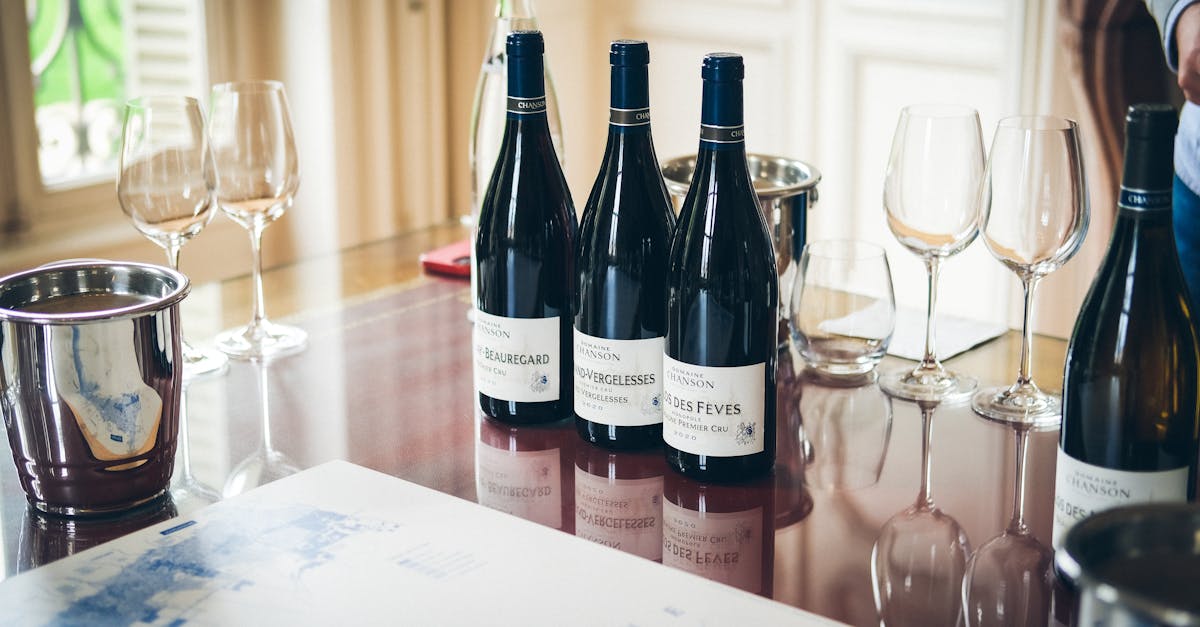
When we talk about Burgundy wine, we enter a world where every drop is a story, every bottle a journey. Behind this prestigious name, several grape varieties, terroirs, and winemaking methods combine to offer a palette of aromas as rich as they are subtle. Identifying these aromas is a bit like decoding a poem written with fruits, flowers, spices, and sometimes a hint of earth. You don’t need to be a sommelier to do it; just a little attention, curiosity, and, above all, one step at a time. Domaine de la Romanée-Conti or Louis Jadot, for example, only reveal their secrets to those who take the time to experience them. With a keen sense of olfactory observation, everyone can surprise themselves by deciphering the delicate touches that make a Burgundy wine unique. Let’s discover together the tips that will facilitate your experience and make you love these Burgundian wonders even more. On this journey, we’ll try to get everyone on the same page on the basics: what’s hidden in a glass, how to train your nose, and most importantly, how not to get lost in the hundreds of sensations that can arise. Whether it’s a white from Olivier Leflaive or a Pinot Noir from Domaine Faiveley, you can learn to spot these typical fragrances without any hassle. Burgundy offers aromas that are often fresh and delicate, to which are sometimes added woody or tertiary notes depending on the age of the wine. Understanding this hierarchy really boosts the tasting experience, promising you’ll never look at a glass of wine the same way again.
Finally, for the more curious, we’ve included some useful links to resources for further exploration, practical fact sheets, and even workshops for those who prefer to learn by working with real bottles and glasses. From Joseph Drouhin and Bouchard Père et Fils to the famous Caves de Bailly-Lapierre, each house has its own unique twist to discover. Ready to take things to the next level? We’ve put together this guide so that identifying the aromas of Burgundy wines is easy, it works pretty well, and it’s a feast for the eyes… well, a feast for the nose!
How do you recognize the primary aromas of Burgundy wine? 🍏🍒
First of all, we’re asking ourselves the question: what is a primary aroma? As simple as pie, these are the scents that come directly from the grapes. No fuss, it’s nature speaking. In the case of Burgundy, the white wine paradise revolves mainly around Chardonnay, while Pinot Noir reigns supreme for the reds. It quickly becomes clear that each grape variety carries its own unique palette of aromas, which must be carefully picked at the time of tasting.
In the whites, expect to discover fresh and fruity aromas: lemon, pear, green apple, sometimes even a hint of peach or apricot. It’s that “work well done by nature” quality that emerges. In some vintages, such as those from Olivier Leflaive, you’ll also detect a few discreet floral notes: linden, acacia, or a hint of violet, often enhanced by the mineral freshness of the Burgundy terroir.
For Burgundy reds, Pinot Noir offers a spicier and fruitier journey. Cherry, wild strawberry, and raspberry tickle the nose, sometimes blended with a hint of blackcurrant. Not to mention a convincing hint of vegetation: green pepper in the background, a hint of eucalyptus, or licorice. Grab a glass from Château de Pommard or Domaine Faiveley and let your nose explore these nuances without pressure. Here’s a simple table to draw up a composite portrait of the primary aromas in Burgundy wines:
Type of wine 🍷
Fruity Aromas 🍓
| Floral Aromas 🌸 | Vegetable Aromas 🌿 | Mineral Aromas 🪨 | White Wine (Chardonnay) | Lemon, apple, pear, peach |
|---|---|---|---|---|
| Linden, acacia, violet | Fresh herbs, boxwood | Gunflint, flint | Red Wine (Pinot Noir) | Cherry, strawberry, raspberry, blackcurrant |
| Rose, peony, violet | Green pepper, eucalyptus, licorice | – | To really aim correctly, there’s no need to rush in headfirst: start by smelling gently, breathe in several times, then observe if certain aromas recur. Be curious: a wine from Joseph Drouhin or Bouchard Père et Fils may surprise you with its finesse. Each winery adds its own unique touch while respecting the natural character of the grape variety. If you’d like to deepen your knowledge of these fundamentals in practice, the tasting workshops offered at | vin-et-chocolat.fr |
are perfect for learning while having fun. Discover the captivating aromas of Burgundy wines, where each sip reveals a palette of complex fragrances ranging from juicy red fruits to delicate floral notes. Explore the richness and diversity of Burgundy’s terroirs through their unique wines, a true invitation to a sensory journey to the heart of this iconic wine region. What are the secrets of secondary aromas in Burgundy wines? 🔄🍞
In Burgundy wines, this phase often produces those little touches reminiscent of pastries or confectionery. You can smell fresh butter, a golden brioche, or even a cream that rewards malolactic fermentation. For example, Louis Jadot is renowned for its wines where such notes emerge elegantly, reinforcing the wine’s rich character.
In reds, expect slightly sweeter and rounder notes, sometimes reminiscent of ripe banana or English candy, aromatic and light. In some whites, you can even detect a hint of pineapple or a yeasty flavor reminiscent of the bubbles of a crémant. To help you remember, here’s a list of typical secondary aromas:
🍞 Fresh butter, brioche, cream
🍌 Ripe banana, English candy
🍍 Fresh pineapple (rarer but present in some white wines)
- 🍪 Breadcrumbs, yeast, biscuit
- These aromas are found in several estates renowned for their masterful winemaking techniques, such as Domaine Faiveley or Albert Bichot. To explore these subtleties, a visit to
- vin-et-chocolat.fr
- provides excellent resources on Burgundy winemaking and its olfactory tips. Aroma Type 🍰
Examples 🍃 Found Areas ⭐ Pastry
| Butter, brioche, cream, breadcrumbs | Louis Jadot, Albert Bichot | Confectionery |
|---|---|---|
| Banana, English candy, pineapple | Domaine Faiveley, Caves Saint-Pierre | Yeast |
| Yeast, biscuit, light toast | Caves de Bailly-Lapierre | https://www.youtube.com/watch?v=LOvxcAMykWM |
| How to detect tertiary aromas when tasting an aging Burgundy wine? 🍂🥃 | Now we’re entering the big leagues: tertiary aromas. This is what happens when wine ages, whether in oak barrels or in the bottle. These are deeper, more complex aromas that can create all the magic of Pinot Noir or Chardonnay after a few years. Some love them, others may struggle a little at first. | With age, we notice woody notes (new wood or pine), but also spices like cinnamon, cloves, or vanilla. All of this comes from the wine’s contact with the wood and the slow evolution of the aromatic compounds. Great wineries like Domaine de la Romanée-Conti or Caves Saint-Pierre know how to handle aging with precision so that each aroma flourishes without ever taking over. |
🌰 New wood, pine
🎄 Cinnamon, cloves, vanilla
☕ Coffee, chocolate, tobacco leaves
🐾 Leather, game, meat, fur
- 🍄 Mushrooms, truffles, humus
- This aromatic richness is often a key criterion for appreciating a great Burgundy. For the curious, a visit to Château de Pommard or a guided tasting with Olivier Leflaive can truly reveal all this potential. Need advice on deciphering your aged wines? A visit to
- vin-et-chocolat.fr
- can also help. Although this site is more focused on the Rhône, the methods are similar and very informative.
- Discover the captivating aromas of Burgundy wines. Dive into a world of rich and complex flavors, where each sip reveals subtle notes of fruit, spices, and authentic terroir. Aroma Category 🍷
Examples 🌿 Domaine Inspiration ⭐ Woody
| Domaine de la Romanée-Conti, Olivier Leflaive | Spicy | Cinnamon, clove, vanilla |
|---|---|---|
| Château de Pommard, Bouchard Père et Fils | Empyreumatic | Coffee, chocolate, tobacco |
| Domaine de la Romanée-Conti, Albert Bichot | Animal | Leather, game, meat |
| Louis Jadot, Domaine Faiveley | Undergrowth | Mushrooms, truffle, humus |
| Bouchard Père et Fils, Château de Pommard | https://twitter.com/winespector/status/1877378602901053513 | What tips can you give to sharpen your nose and better identify the aromas of Burgundy wine? 👃📚 |
| To nail your nose, the key is to practice without fuss. You might be thinking, “This is going to be too technical for me,” but no: just play the joker card and practice regularly. Here’s how: | 🌸 Raise your awareness of everyday smells: flowers, herbs, fruits, spices. A stroll through the market or a forest outing are your best allies. | 🍷 Use a specific aroma kit, like |
, perfect for strengthening your olfactory memory at home.
⚡ Taste blind to challenge your brain: it’s an excellent exercise.
- 📖 Take careful notes, even if you’re messy at first. There’s no point in getting discouraged.
- 🎡 Use a aroma wheel to better structure your impressions. In this area, there are very useful documents that can be found online on specialized sites like vin-et-chocolat.fr.
- A small motivational chart with good habits to adopt, just to get everyone on the same page:
- Tip 🧠
- Benefits 🏆 Concrete example 🍇Smell plants and fruits daily
Better olfactory recognition
| Stroll through the market to smell fresh citrus fruits | Use a flavor kit | Quickly strengthen sensory memory |
|---|---|---|
| Practice with a “Nez du Vin” kit | Blind tastings | Develops attention and precision |
| Organize a tasting with friends | Note down your impressions | Allows you to assess your progress |
| Keep a tasting journal | Refer to a flavor wheel | Orders sensations, avoids confusion |
| Use a printed wheel during tasting | These good habits are far from being reserved for professionals. On the contrary, any wine lover, curious and eager to understand, will benefit from them. In fact, some of the best Burgundy winemakers, such as Joseph Drouhin or the teams at Caves Saint-Pierre, use these methods to train their in-house oenologists. If you want to try them out in the field, check out the workshops on | vin-et-chocolat.fr |
| ; you won’t be disappointed! Discover the captivating aromas of Burgundy wines, where the richness of ripe fruit, the subtlety of spices, and the freshness of flowers intermingle to offer a unique sensory experience. Immerse yourself in the world of Burgundy’s great vintages and let yourself be seduced by their refined bouquets. | https://www.youtube.com/watch?v=kfRlP6Z2IuU | What pitfalls should you avoid to ensure you don’t miss the aromas of a Burgundy wine? 🚫❌ |
Because yes, it’s easy to make a mistake if you’re not careful. Whether it’s a wine that’s too cold, a glass that doesn’t play the game, or simply a mind too focused on what it “should” smell, some pitfalls are classic and deserve to be highlighted. 🥶 Wine served too cold: some aromas close up and remain hidden. For whites, an ideal temperature is around 12°C, for reds 15-16°C, so that everything expresses itself well.🍷 Unsuitable glass: Forget glasses that are too small or too wide. The shape of the glass helps direct the aromas toward the nose, so choose a typical Burgundy glass with a wide bowl and a narrow neck.
😵 Trying several wines in succession without a break: the nose tires quickly, so allow a break between each tasting. Pitfall 🚧
Consequence ⚠️
- How to avoid it ✅
- Wine too cold
- Hidden aromas, flat taste
- Serve at the right temperature (12°C white, 15-16°C red)
- Unsuitable glass
| Poor olfactory perceptions | Use a suitable Burgundy wine glass | Over-analyzing |
|---|---|---|
| Stress, confusion, false leads | Let go and feel | Don’t aerate the wine |
| Blocked aromas | Swirl the wine in the glass | Tasting too quickly |
| Tired, less precise nose | Take breaks between wines | Conclusion on these pitfalls? You’re on the right track, trust yourself, and enjoy with peace of mind. No need to be able to recognize everything the first time; each tasting is an opportunity to improve. To enrich your experiences, don’t hesitate to also browse the information-rich pages on other regions such as the Loire Valley or discover the subtleties of Alsace red wines. |
| FAQ – Everything you need to know about the typical aromas of Burgundy wine ❓ | How do you differentiate between primary and secondary aromas? | Primary aromas come directly from the grape (fruit, flowers), while secondary aromas are produced during fermentation (pastry notes, yeast). |
| Does aging really affect aromas? | Yes, it brings more complex tertiary aromas like wood, spices, leather, or mushrooms, which develop over time in the bottle or barrel. | Do all Burgundy wines have these aromas? |
Most do, but depending on the estate (Domaine Faiveley, Domaine de la Romanée-Conti) and the vintage, the palette can vary. How can you practice to better sense aromas? By regularly smelling spices, fruits, and flowers, by tasting blindly, and by using aroma kits, you can effectively train your nose. Should you use the special Burgundy glass?Absolutely; it helps concentrate the aromas toward the nose, making tasting more precise and enjoyable.